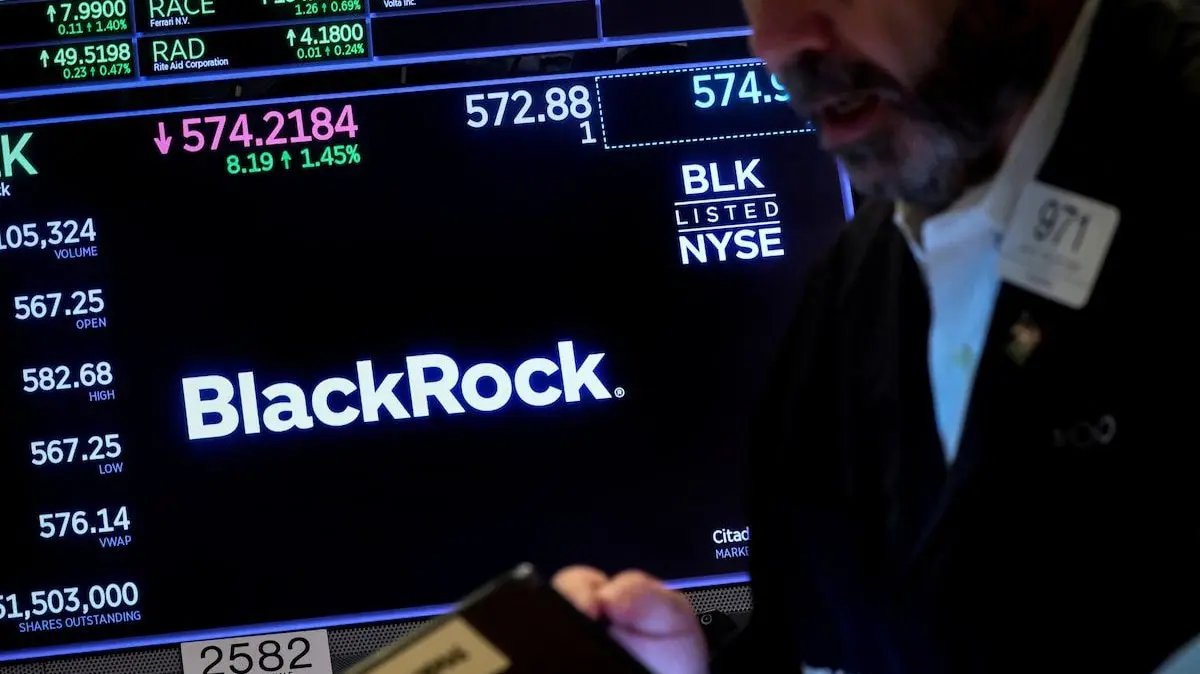
PORTAL7.CO.ID - Global asset management behemoth BlackRock has enforced withdrawal limitations on its primary private credit vehicle following a notable escalation in redemption requests from investors. This action underscores growing apprehension across the market concerning the performance and accessibility of this previously lucrative asset class.
The market reaction was swift, with shares of the world's largest asset manager experiencing a notable 4.6% dip during early trading sessions. This negative sentiment shift follows recent turbulence observed among other significant entities operating within the specialized private credit sector.
Reports cited by Reuters indicate that BlackRock’s $26 billion HPS Corporate Lending Fund was subjected to withdrawal demands amounting to $1.2 billion in the first quarter. This figure represents a substantial portion, approximately 9.3%, of the fund’s total net asset value.
BlackRock communicated to its investors that it would only be satisfying $620 million of these outstanding requests. This payout reached a crucial 5% threshold, thereby activating a pre-defined mechanism that empowers the asset manager to impose restrictions on further capital outflows.
The current redemption pressure vividly illustrates a fundamental liquidity mismatch inherent to the private credit market structure. In this specific area, capital provided by investors is frequently tethered to assets that cannot be quickly liquidated or sold on public exchanges.
Broader market instability has prompted investors this year to gravitate toward assets perceived as safer havens, moving away from riskier placements. These widespread concerns are compounded by fears related to potential economic deceleration, geopolitical tensions in the Middle East, rapid AI advancements, and an uptick in corporate loan defaults.
Despite implementing these restrictive measures, HPS management maintained that the current environment of market uncertainty actually presents emerging investment opportunities. They defended the decision by arguing that preserving the fund's readily available capital serves the greater interests of the entire fund structure.
Management asserted their strategic rationale in a formal statement, declaring, "In our judgment, preserving the fund's available capital to lean into this perceived opportunity set, while providing liquidity to shareholders consistently with the fund's designed parameters, is in the best interest of the fund as a whole," HPS said in a statement.
Other major financial institutions are concurrently navigating comparable difficulties within the space. For instance, Blackstone recently raised its own redemption limit from an initial 5% up to 7%, following injections of $400 million from both employees and the firm itself to manage investor demands.